
Finding Lubbock Resident Records
Lubbock keeps no single list of everyone in town. The trail depends on the question you bring. An owner name or street address points to the appraisal district. A deed, lien, marriage license, or assumed-name filing sits with the County Clerk. Registration questions fit the Texas voter tool. For a household from an earlier decade, library and archive shelves can beat any online index, because each record describes a role in a document rather than a current occupant.
Start from your strongest detail. Save the source, the search date, and the spelling you used. A property result yields a parcel ID and situs. A deed index adds recording dates and parties. A directory fills the years between census schedules. That small log keeps two Lubbock residents with the same name from collapsing into one, and it stops a guess from hardening into a conclusion.
- Run an address or owner name in the Lubbock Central Appraisal District property search.
- Check the Texas voter-status tool only for the person and registration question it is designed to answer.
- Search the County Clerk index by grantor or grantee name, then narrow with a date range or document type.
- For an older household, ask Mahon Library or the Southwest Collection for the right directory, microfilm, yearbook, or reference file.
- Use the custodian's counter, archive staff, or a Texas Public Information Act request when the record is not online.
Note: a public index can confirm a recorded connection, yet it cannot by itself prove that a person currently lives at an address.
Lubbock Residents Directory Offices
The offices behind a Lubbock residents directory split by record type. The County Clerk handles recorded instruments. That office also files local vital records. LCAD keeps the current appraisal accounts. City GIS layers map parcels, streets, ZIPs, and city limits. Texas election and court systems add a separate state layer on top. Once the parcel is identified, follow the Lubbock street directory route for an address-by-address trail.
Lubbock County Clerk
904 Broadway, Room 207
Lubbock, TX 79401
(806) 775-1076
Texas Secretary of State
Statewide voter-status service
Registration question and status
Online access
Lubbock Property Roll Clues
An appraisal district search is the natural first stop when a Lubbock residents directory search starts with a street or an owner name. Basic search takes a name or a QuickRef. Advanced Search narrows by street-number range, street name, city, ZIP, neighborhood, owner, business name, legal description, parcel fields, and property type. The result set can be rich. A single account connects an owner to a situs address, account identifiers, value, taxing units, exemptions, and map actions. Those fields anchor the record.
| LCAD field | Use in a Lubbock search | Reading caution |
|---|---|---|
| Owner name or owner ID | Find an appraisal account | Match it against another identifier |
| Street range and street name | Limit results to an address area | Use current street spelling |
| City and ZIP | Filter a broad property search | Mailing geography can differ |
| QuickRef or property ID | Return to a known account | Record the identifier with the date |
| Subdivision, block, tract, or lot | Bridge a legal description to a parcel | Useful when a street number changed |
A parcel is the mapped tax account for land or an improvement. The situs address is the property's physical location. A mailing address is where the appraisal district sends mail, and it can differ from the situs. A roll is an official list kept for a set purpose, here the appraisal and tax accounts.
Owner mailing addresses are useful clues. They never prove the owner lives there. A homestead classification supports an owner-occupancy guess. Even then, it names no one else in the household.
Lubbock Deed Index Connections
The County Clerk's EagleWeb system connects people to recorded events rather than to a general resident roster. Its public searches cover all recordings and filings, land records, assumed names, marriage certificates, and birth and death certificates. Search Help explains the grantor and grantee fields. It also covers reception number, date range, and document-type narrowing. More than one detail tames a common name.
Lubbock County Clerk EagleWeb is the official entry point. The site states that its material is for convenience, may contain errors or statutory redactions, and is not the complete official repository. That warning matters. For a record image or an older book, the Clerk counter and archives remain the fallback. The online route does not expose everything.
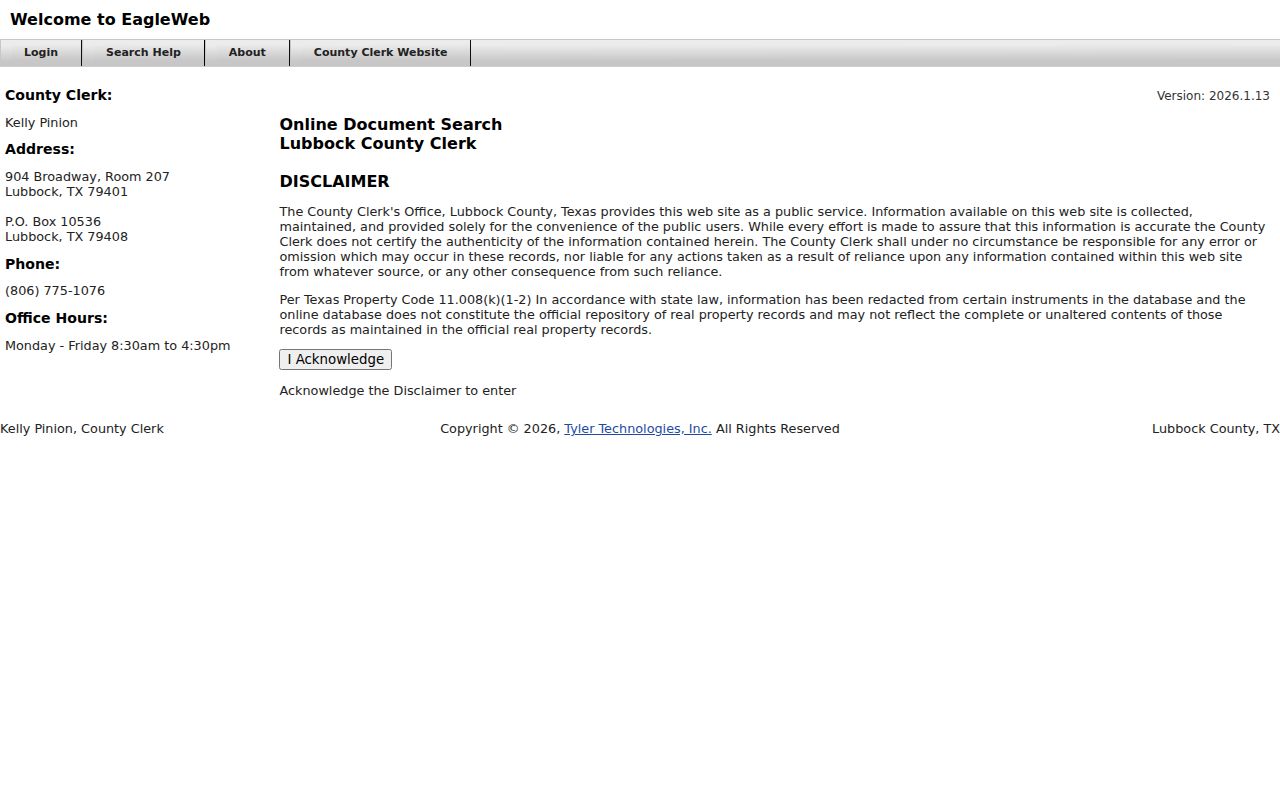
The EagleWeb screen shows the acknowledgment gateway that appears before the public index opens. A name result returns several fields. Keep the recording date, party role, reception number, and document type together. A grantor conveys an interest. A grantee receives it. Those roles trace a transaction, not who lives at the property now.
- Grantor or grantee name
- Document type and selected date range
- Reception number for a known filing
- Legal description or parcel detail found in the record
Current Lubbock Resident Directories
Current Lubbock resident directories are really several focused record sets, not one roster. The appraisal roll centers on owners. The voter service answers one registration at a time. Recorded documents name parties to filings. A court index verifies a case connection. A chamber or neighborhood listing covers only its own participants. Compare scope first. That way a partial source never stands in for a full Lubbock resident list.
| Lubbock source | Person or connection shown | Keeper | Access channel |
|---|---|---|---|
| Property appraisal account | Owner and property account | LCAD | Public search, office, email, or PIA route |
| Voter-status lookup | Individual registration status | Texas Secretary of State | VUID, driver-license, or name route |
| Recorded documents | Grantors, grantees, and named parties | County Clerk | EagleWeb, counter, and archive staff |
| Case records | Party and case information | District Clerk and Texas courts | Portal, clerk, and archive copies |
| Community records | Members or participants | Association or organization | Organization-held access varies |
When two records might describe one person, use the Lubbock resident lookup workflow. The method pairs names with details. Addresses, dates, party roles, and other record specifics beat any single result.
Lubbock Voter Lookup Limits
Texas keeps its voter status check focused on one person at a time. Texas Am I Registered? is the official entry point. The Lubbock residents directory image below shows it. Searchers can enter a VUID or Texas driver-license number. A name route also works. But it demands county, date of birth, and ZIP code together. Treat the answer as a registration check for that one named person. It is not a street roster. It will not list every registered voter at a Lubbock address.
State law explains the limits. Texas publishes selected voter fields while shielding Social Security, DPS, telephone, and protected-residence data. Address-confidentiality and protected-voter rules can lawfully pull a match out of ordinary public view.
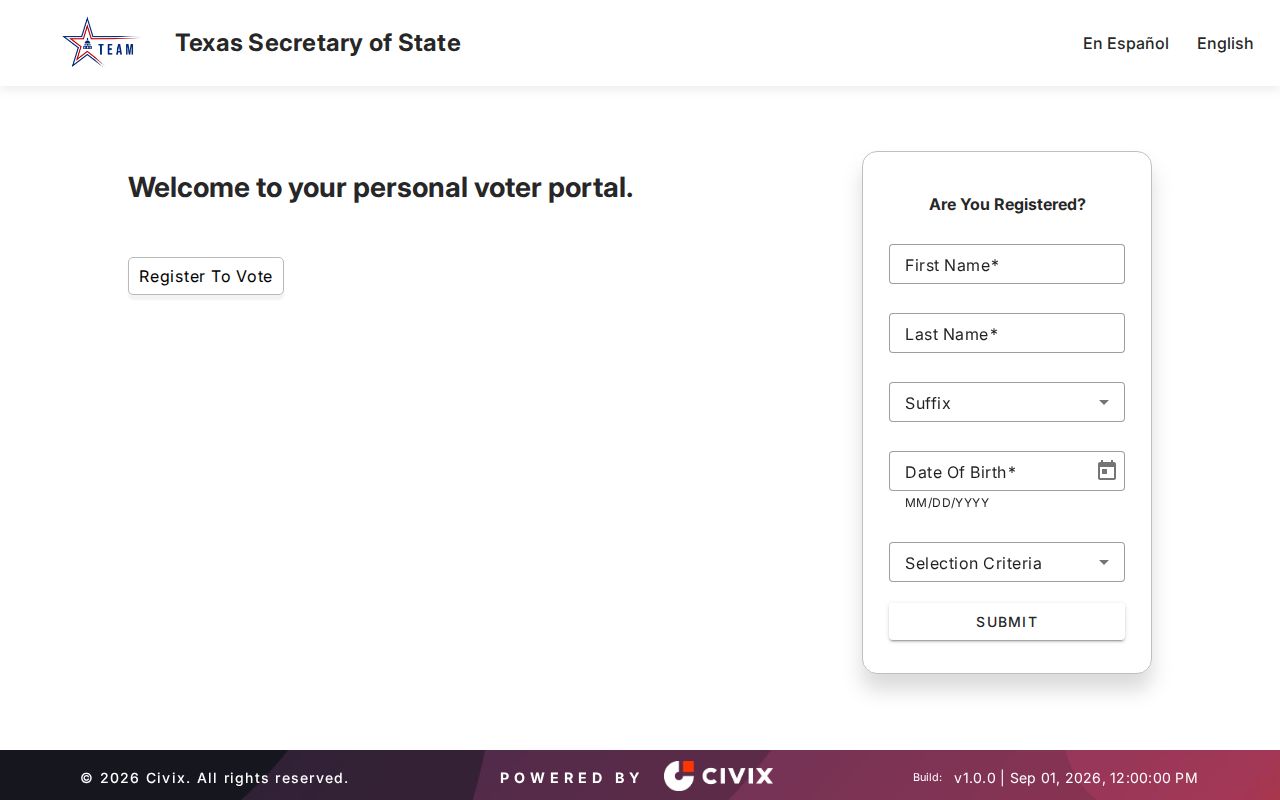
The lookup works best with a name first. Another Lubbock source can give you that name and some current context. Renters may not appear. So may other household members, unregistered adults, and protected voters. A missing result, in other words, never proves a person is absent from Lubbock.
Note: Texas Election Code confidentiality rules apply to protected people. They restrict which voter details can be shown or released.
Lubbock Court Record Checks
Courts verify facts, but they cannot replace a Lubbock residents directory. The District Clerk keeps local civil, family, and criminal files plus the archives. Local guidance builds case numbers on current civil and family formats like DC-2023-CV-XXXX and DC-2023-FM-XXXX. Anything older than August 2021 follows earlier formats. Civil and family e-filing became mandatory July 1, 2014. Criminal milestones followed in 2017 and 2018.
Texas appellate Case Search supplies the interface pictured here. The state refreshes its data and documents nightly. It points trial-court users toward re:SearchTX or the clerk. For certified material and archived records, contact the District Clerk or archives directly. Do not rely on the statewide view for completeness.
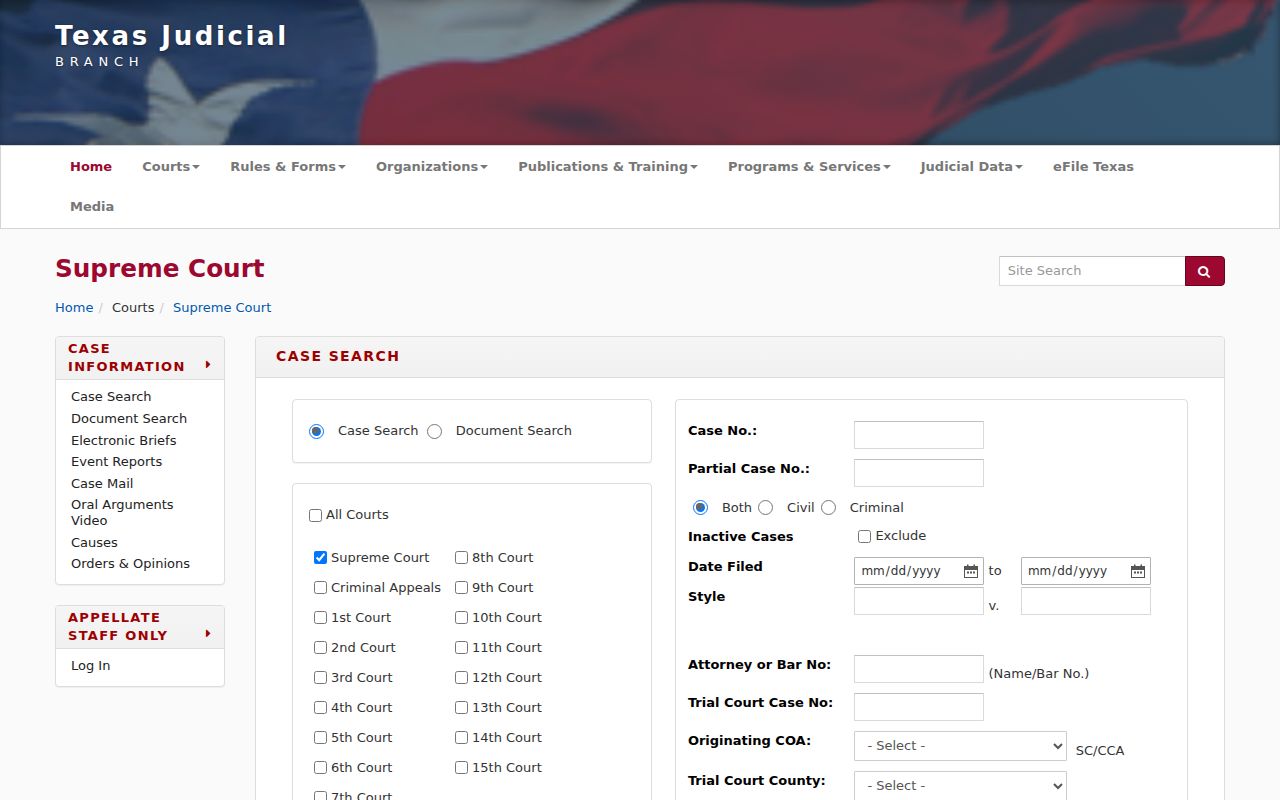
The search screen offers court selection, case or document number, case type, date, style, attorney, and trial-court information. A docket is the court's chronological case record. A disposition is the outcome entered in that case. Neither term ever proves an address or current residence in Lubbock.
Lubbock Vital Index Routes
Vital records divide by event, date, and custodian. City of Lubbock Vital Statistics holds Lubbock County birth and death records, with in-person or online ordering. A death in Slaton follows the Slaton route. Texas DSHS provides state indexes and certificate procedures. The County Clerk issues certified marriage licenses. The District Clerk issues certified divorce decrees. Keep the distinction clear: a state verification is never the certified local record.
Texas vital-record ordering presents the choices. Under Texas Government Code §552.115, birth records open at 75 years and death records at 25. Recent certificates stay limited to the person, immediate family, guardian, legal representative, or someone with documented direct tangible interest.
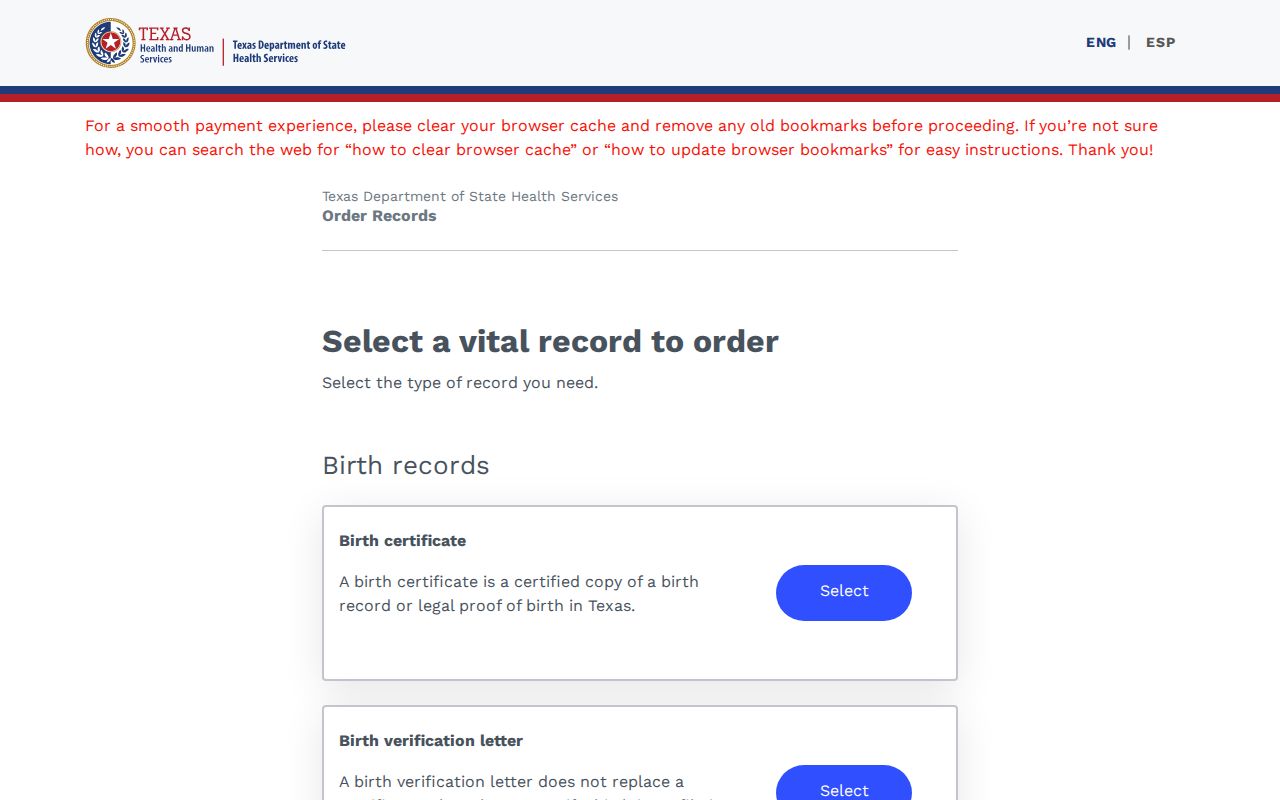
DSHS marriage indexes start in 1966. Divorce indexes start in 1968. An index can spark a relationship lead, but the certified certificate or decree must come from the office that holds it.
Lubbock Requests Beyond Portals
When the online search ends, Lubbock still has documented access channels. The County Clerk keeps a counter at 904 Broadway. LCAD takes office, email, fax, and public-information routes. The District Clerk posts clerk and archive contacts for local court records. City Building Safety handles permits through Citizen Self Service. Yet the City tells requesters to use its records route when a permit is not visible. Sealed plans need a viewing appointment.
City of Lubbock's public-information route accepts online requests. It also takes email to the Open Records Officer, mail, in-person delivery at Citizen's Tower, and fax. The Texas Public Information Act sits in Texas Government Code chapter 552. State Attorney General guidance lays out the request framework. It includes the ten-business-day notice or ruling process when a governmental body wants to withhold information.
Lubbock Library Directory Trails
Current records only reach so far back. For older threads, Mahon Library and the South Plains Genealogical Society supply the Lubbock residents directory shelf. Texas Tech's Southwest Collection and state archive guides add more. Lubbock Public Library Electronic Resources appears below. Mahon offers Ancestry access, digitized Lubbock yearbooks, and selected home-access services through staff help. Not every school year is digitized; post-1977 yearbooks must be viewed in person at Mahon. Most genealogy and reference material stays non-circulating. The library can copy an index, table of contents, or specified pages.
The South Plains Genealogical Society backs the genealogy section with volunteer help. Books, periodicals, microfilm, and CDs round out its holdings. Texas Tech holds local maps, cemetery records, and lot surveys. Its stacks also keep neighborhood material, oral histories, and newspaper references.
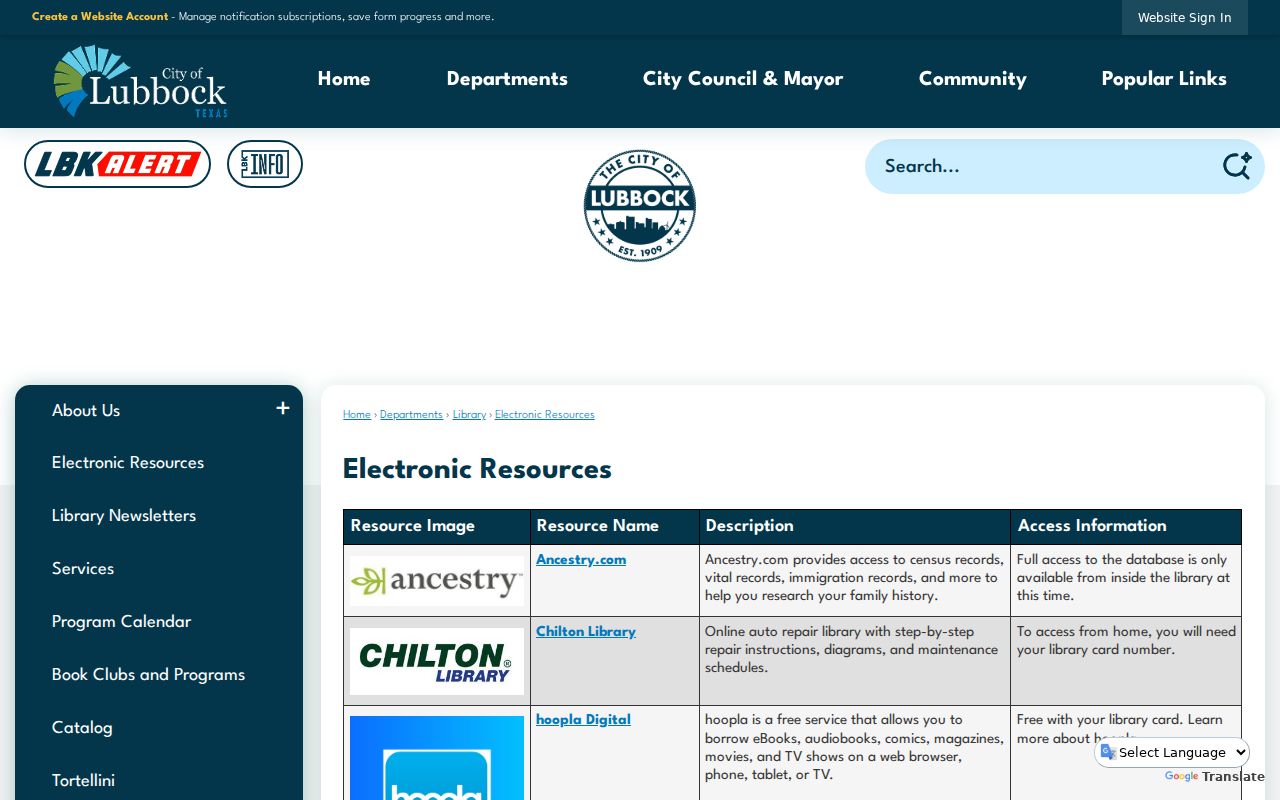
Those shelves make a strong fallback for a former classmate, a family-history hunt, or an address trail missing from a current public portal. Interlibrary-loan material can take four to six weeks. It also carries a documented $3 received-item charge. Confirm availability before ordering.
Historical Lubbock Resident Directories
One old Lubbock directory volume can pin down a household for a single year. It may list an address, an occupation, a spouse, and the neighbors on the same street. Hudspeth published the local run from 1930 through 1972. Polk followed from 1973 through 2003. A family-history trail gets much stronger when you pair those volumes with census schedules and recorded documents. Leaning on any single book is the weaker path.
The Lubbock city directories page covers collection details, access routes, and how to read an entry. Old addresses sometimes fail against modern parcel maps. Texas Tech lot surveys for additions like Original Town, Overton, and McCrummens can bridge the old lot and block numbers. Search again after that.
Lubbock Archive Preservation Path
Lubbock County's records history explains many empty search results. Under the County Clerk archive plan, official county records have been computerized and automated since 2006. Older microfilm and paper are still being digitized. Handwritten and typed books are being re-indexed, fading Photostat volumes restored, and older material imported into the current system. Archive funding has concentrated on records filed before 1974.
So treat 2006 as a system milestone. It is not a promise of complete online coverage. When you contact archive staff, bring a book series, an approximate year, a party name, and a legal description if you have one. Ask whether the material has been restored or indexed, or is still waiting on import. That call is the Lubbock fallback whenever a public search misses an expected historical record.
Lubbock Fraud Notify Context
Lubbock County offers Fraud Notify, an alert service tied to recorded documents. It watches registered names across Lubbock County filings. It points a subscriber to the official document for review. It is only a notification tool. No alert means a filing is invalid, and none proves misuse was prevented. The subscriber still has to inspect the document. The subscriber must contact the County Clerk when a filing looks unfamiliar.
Lubbock County Fraud Notify is the official sign-up page. The service works well for property owners. It draws on the local recording system rather than a broad name database. Keep the alert email, document date, and reception number together before raising a question with the custodian.
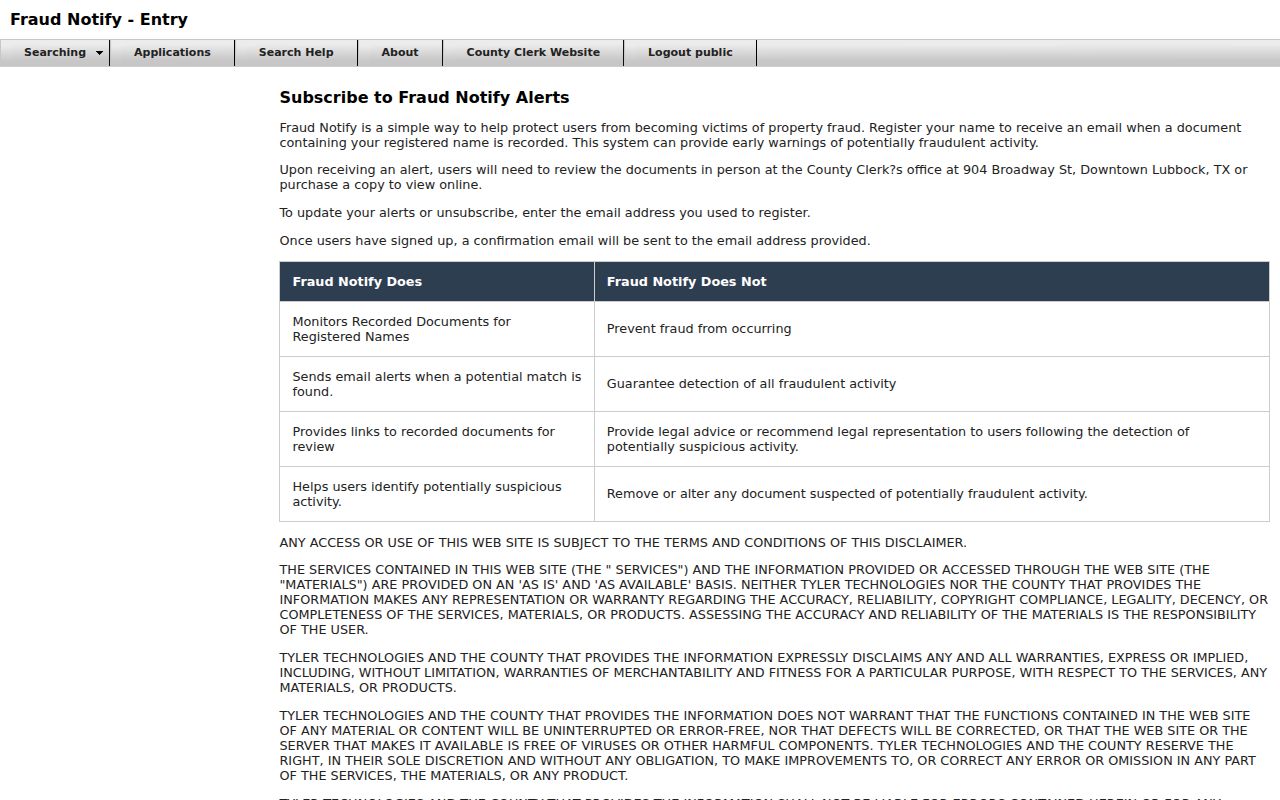
The sign-up page walks through name and email registration. An alert should open a careful review of the official record, not a public accusation or a rushed conclusion about another person.
Lubbock Resident Record Boundaries
A Lubbock residents directory search has firm public-record boundaries. Driver-license and motor-vehicle address data are restricted by law. Utility customer lists are not a public household roll. Protected voters and address-confidentiality participants may be shielded from view. A deed party or tax-roll owner is not always the current occupant, and an absent result can simply mean the source never covered that person.
Official records still serve good purposes. People use them to reconnect with family, document local history, research an estate, verify a seller, or trace a neighborhood record trail. Cross-check names, dates, addresses, and document roles across more than one Lubbock record before trusting any single conclusion.