
Start a Lubbock Resident Lookup
There is no single official list of everyone in Lubbock. Each record answers a narrower question. The Lubbock Central Appraisal District property search is usually the best starting point for a named owner and a parcel. The Texas voter-status service handles one voter at a time, while the Lubbock County Clerk EagleWeb index follows named parties in recorded instruments. A court party, an owner, and a voter may all be connected to Lubbock at different times. Record the source and date for each result.
| Record | What It Can Confirm | Lubbock Custodian or Tool | Access Route |
|---|---|---|---|
| Appraisal account | Named owner, situs, mailing address, legal parcel details | LCAD Property Search | Public online, phone, email, or office |
| Recorded instrument | Grantor or grantee, recording date, reception number, legal description | County Clerk EagleWeb | Public index, clerk counter, archive request |
| Voter status | Matching registration status and precinct | Texas Secretary of State | Individual lookup; protected fields stay closed |
| Court docket | Party name, case number, category, filing or disposition where public | Clerk, re:SearchTX, and Texas courts | Web, clerk, archives, or certified-copy route |
| Vital index | Event date, county, and relationship clue | Texas DSHS indexes | Index, local custodian, mail, or online order |
Start with an address question in LCAD, a filing question in EagleWeb, or a court question with the clerk. A property account is not a household roster, and an old filing is not proof of a current address. When the name is common, use a second detail such as a middle initial, legal description, spouse, case number, or directory year before merging records.
Build Lubbock Resident Record Trail
Begin by writing down every name form already known: last name, first name, middle initial, suffix, former name, and common spelling variation. Search the LCAD owner field and save the property ID, exact owner name, situs address, mailing address, legal description, and tax year. The situs is where the parcel sits. A mailing address is where tax notices go, and may be somewhere else.
- Anchor the person to one dated Lubbock signal, such as an LCAD owner account or a county filing that identifies a parcel.
- Search EagleWeb by Grantor or Grantee, then narrow by date range and document type. Match the legal description and recording date, not only the name.
- Check the appropriate court route by party name, style, case number, and filing date. Confirm the docket status rather than relying on a case caption.
- Use a DSHS index for a marriage, divorce, birth, or death clue when it fits the timeline. Request a certified record only from its legal custodian.
For historical research, a Hudspeth or Polk directory, a yearbook, an obituary, or a census schedule can add the time and neighborhood context that a modern index lacks. The Mahon Library and Texas Tech collections are useful fallbacks when the online trail stops. Conflicting results should be left unresolved until the responsible office can explain which current or dated record controls.
- Docket
- A court’s running list of a case’s filings, hearings, and events. It is not proof that every allegation was decided or that a party lives at a listed address.
- Index and image
- An index points to a record with names, dates, or identifiers. An image is the scanned instrument or filing and may be redacted, unavailable online, or available through the custodian.
- Certified copy
- A copy issued and certified by the office that keeps the original. An online result or verification letter does not replace it.
Check Lubbock Court Records Carefully
District civil, family, and criminal files have local clerk routes, while county courts and the municipal court handle other categories. The Lubbock County District Clerk publishes case-number guidance and directs users to support and archives when an older file is not visible. For statewide appellate searching, Texas Case Search offers case and document modes. Its records refresh nightly and it says it is not the official trial-court repository.
| Result Detail | Why It Matters |
|---|---|
| Party style and attorney | Separates similar names and identifies how a case is captioned. |
| Appellate and trial case numbers | Connects a statewide result back to the Lubbock court of record. |
| County, court, and category | Shows where the case belongs and whether it is civil or criminal. |
| Filing date and active status | Places the result in time; inactive does not explain the final disposition alone. |
| Document route | Shows when a user must move to re:SearchTX, the clerk, or archives. |
The Texas Case Search screen shows the court, case-number, style, date, attorney, and originating-court controls used to narrow a public query.
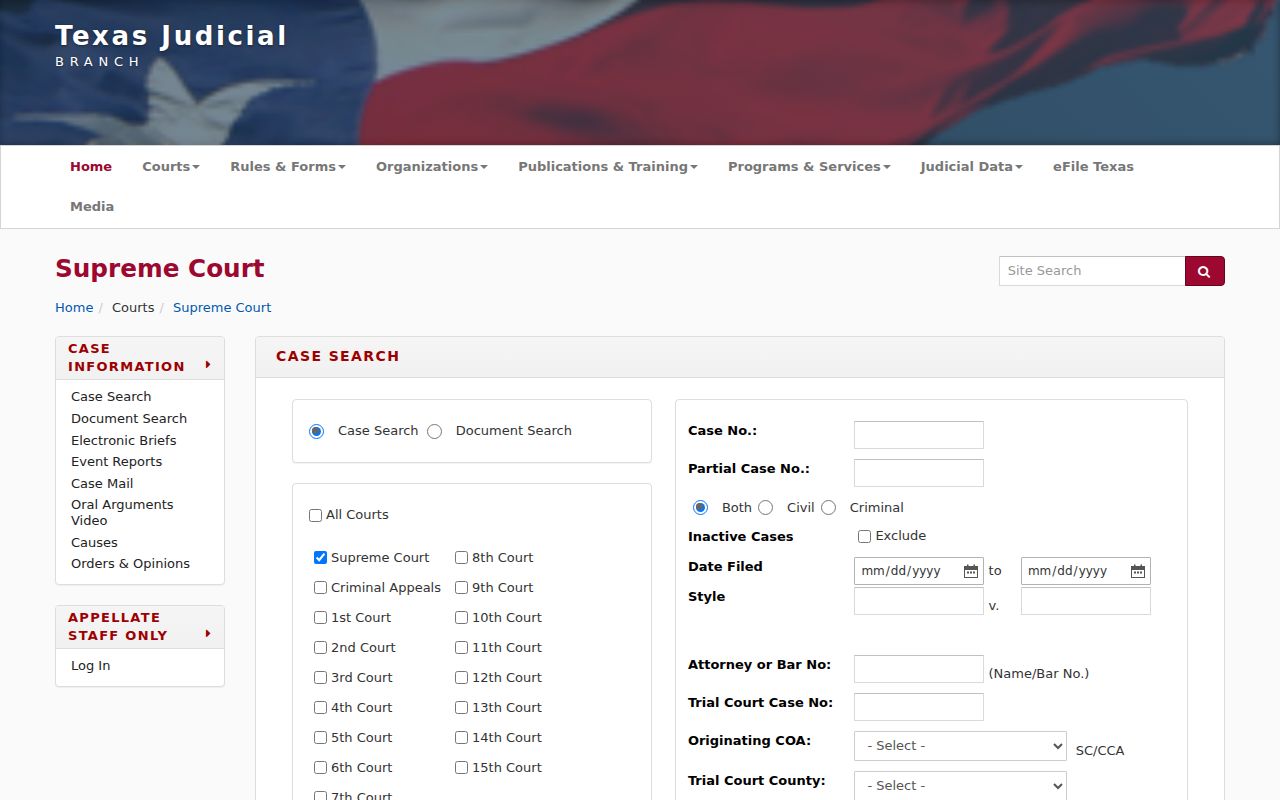
Use the pictured fields to refine a name result, then verify it with the clerk because Lubbock trial files, sealed matters, and certified copies remain under the court’s own rules. District Clerk records guidance also notes different current and older case-number formats.
Read Lubbock Voter Lookup Carefully
Texas provides an individual status lookup, not a Lubbock resident lookup by street. The official routes use a VUID, a Texas driver-license or state-ID number when it was supplied on registration, or a name route that also uses county, date of birth, and ZIP. A successful result can help confirm status and precinct. It does not create a list of nearby voters or reveal protected information.
Myth: A voter search will show everyone who lives at an address. It will not. A Chapter 18 voter-list request is separate from the individual web tool, and the research did not identify a current Lubbock County request form, fee, or delivery procedure. SSN, DPS identifiers, telephone data, and qualifying protected addresses are confidential. A suspense status means the registrar is unsure about an address, not that the person has been proven absent.
The Texas voter-status entry screen is the official starting point for the VUID, identification-number, and name-based paths.
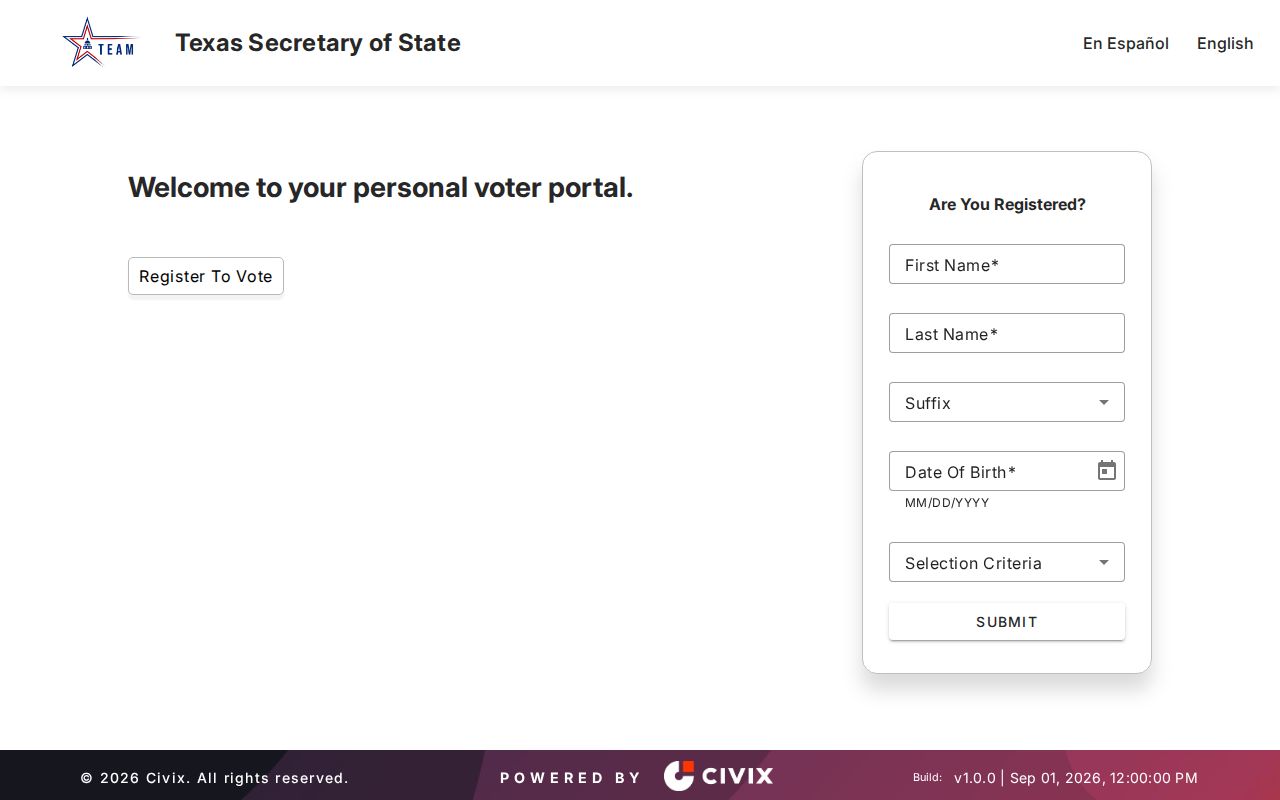
Use a person’s own authorized details and date-stamp the result. The VoteTexas lookup guidance explains the search methods and the meaning of suspense status.
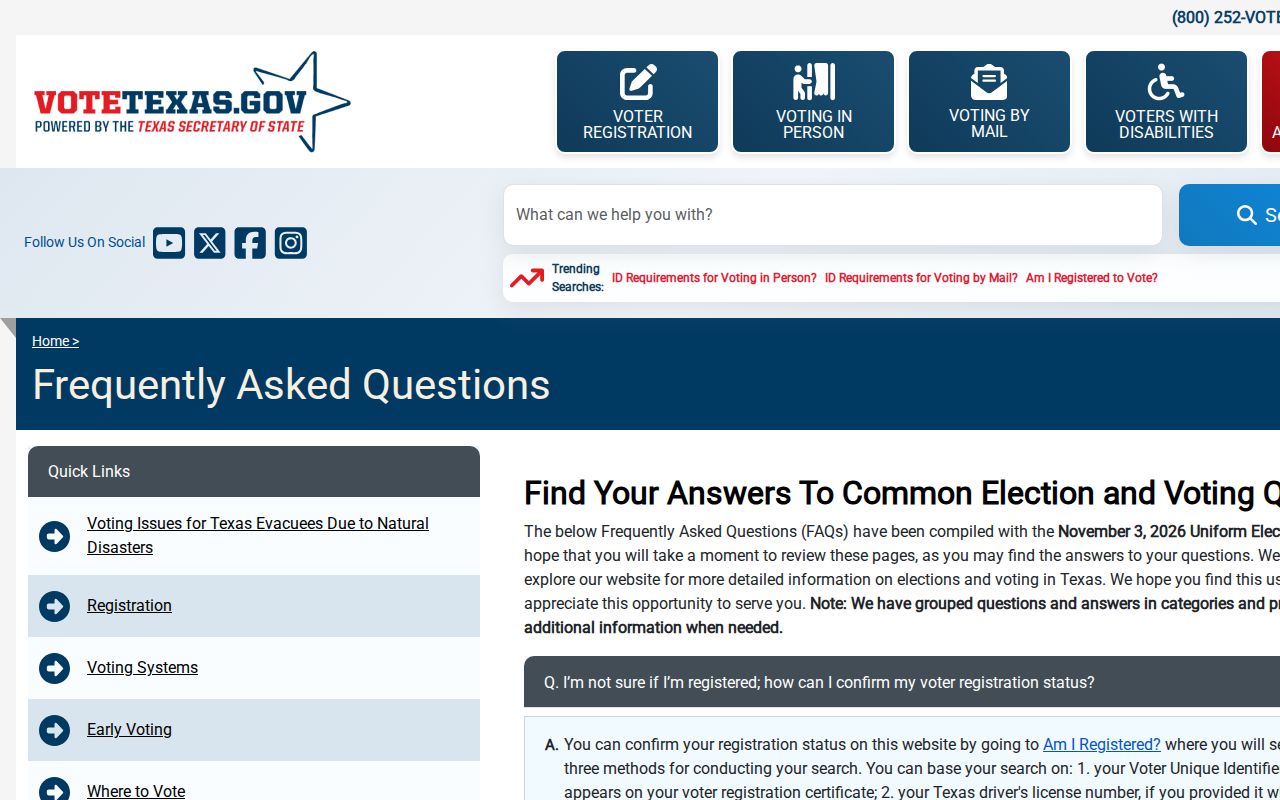
The guidance is a reminder to treat voter information as one current civic signal, then compare it with a property, filing, or historical record that answers a different question.
Use Lubbock Vital Record Clues
Vital records help place a person in a family or time period, but their access rules differ by event and age. Texas Government Code §552.115 opens birth records after 75 years and death records after 25 years. The Texas DSHS marriage index begins in 1966 and the divorce index begins in 1968. Those indexes can provide names, dates, and county clues, but DSHS warns that index data can contain errors and is not a legal document.
For a Lubbock County birth or death, Lubbock Vital Statistics provides local ordering for qualifying events, with a separate Slaton exception for deaths. Certified marriage licenses come from the County Clerk, while certified divorce decrees come from the District Clerk. A verification letter is not a substitute for either certified record.
The Texas vital-record application separates certificate orders from birth, death, marriage, and divorce verification choices.
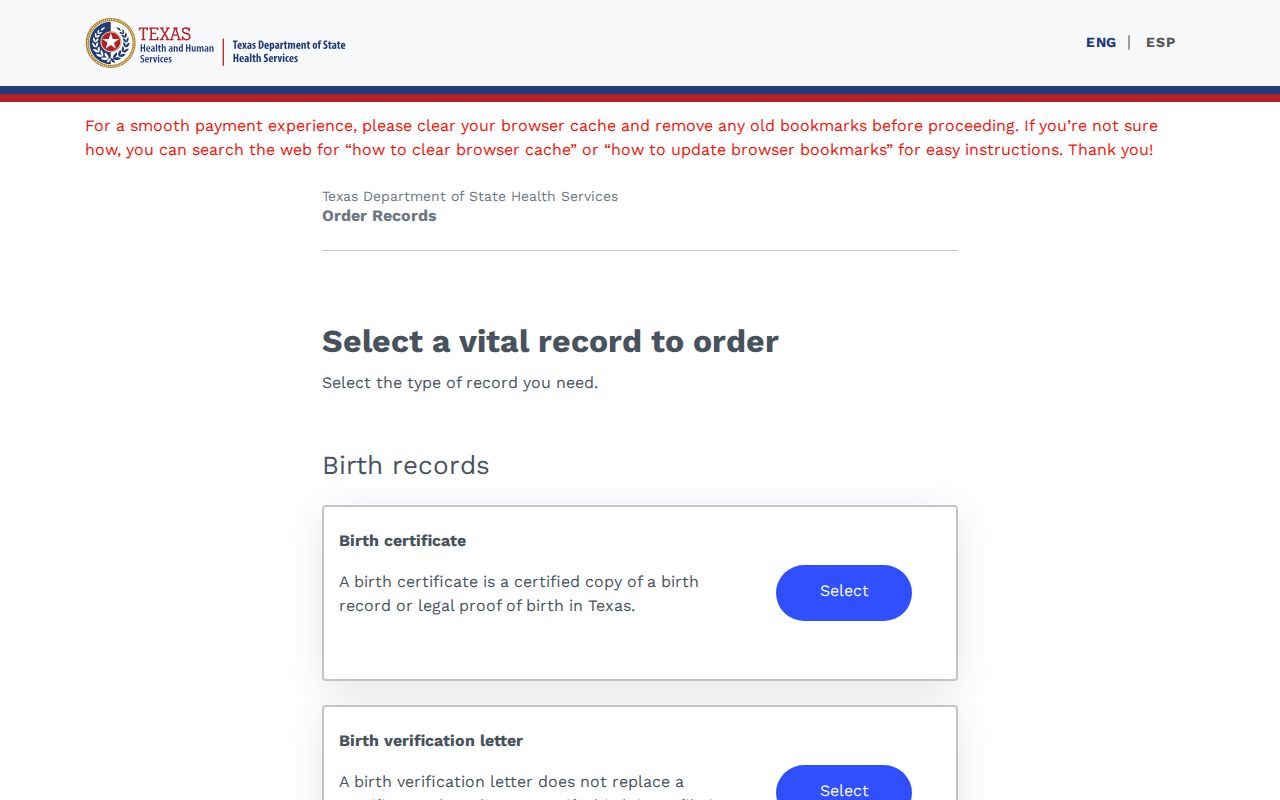
The order screen reinforces an important distinction: an index can suggest a relationship or event, while the appropriate local or state custodian controls access to the legal record.
Note: Recent certificates are restricted to qualified applicants, so an unavailable result can reflect a privacy rule rather than a missing event.
Separate Lubbock Business Record Signals
A business filing can establish a connection to an entity, not a residence. SOSDirect offers entity, assumed-name, people, registered-agent, and document-number searches. It charges $1 per search, and copies or certificates are separate. A result may show a filing address, registered agent, or governing person, but those are business-record roles and should not be treated as a home address.
Local assumed names also pass through the County Clerk. The county fee schedule lists an assumed-name certificate total of $23 for two business names and one owner, with an added amount for additional names. Match the entity status, filing number, name variant, and filing date before tying an entity record to any other Lubbock result. Redacted information remains redacted.
Avoid Lubbock Resident Lookup Mixups
Names repeat. The reliable response is not a larger pile of results, but two independent matching details. A property owner may use a mailing address outside Lubbock, while the situs identifies the parcel. A court party may have an attorney or service address. A directory entry is a dated snapshot. Keep those roles separate until a legal description, spouse, middle initial, case number, neighborhood, or date links them.
Insider tip. LCAD’s owner mailing address can be a strong public clue about where notices go, but it is never proof that the owner occupies the Lubbock property.
For a former classmate or a historical family, Mahon Library’s yearbooks and the Texas Tech Southwest Collection offer more useful time markers than a current-property query. The Southwest Collection maintains obituaries, genealogies, maps, newspaper material, and local reference folders. That kind of dated evidence is especially useful when a name is common.
Verify Lubbock Court Record Freshness
Online court access changes faster than many older record systems. The Texas Judicial Council’s public-access report describes re:SearchTX as a dynamic statewide system with about 150 million documents and generally a 2016 case horizon, with important exceptions. Public documents are described at $0.10 per page, up to $6 sent to counties. Lubbock District Clerk civil and family e-filing began July 1, 2014, with criminal milestones in 2017 and 2018.
That context explains why a web result and an archive response can differ. Search electronically first, then use the District Clerk’s support or archives route for an older case, a certified copy, or an official record. Electronic copies have a stated district schedule of $0.10 per page with a $1 minimum per document; paper copies are $1 per page, with certification additions. Confirm the current charge and the correct file before ordering.
Respect Lubbock Resident Lookup Limits
Some absences are required by law. Texas protects recent birth and death certificates, sealed or expunged court matters, adoption records, DMV data, voter SSN and DPS information, telephone data, and qualifying protected addresses. The Attorney General Address Confidentiality Program uses a substitute mailing address for qualifying victims, and protected voter records can show an asterisk in place of a residence. Do not try to reconstruct a suppressed address from other public fragments.
Texas Public Information Act requests under Tex. Gov’t Code ch. 552 are a useful fallback for specific administrative records that are not online. State the record, date range, custodian, and preferred format. The Act does not require an office to answer a research question, create a new record, override confidentiality, or make a certified copy free. For a correction, contact the actual record holder: LCAD, County Clerk, voter registrar, District Clerk, DSHS, or the local registrar.
Lawful use. Use Lubbock records for personal, lawful research and respect every confidentiality limit. Texas Penal Code §§42.07 and 42.072 can apply when information is used to harass, threaten, monitor, or intimidate another person.
Note: A result is strongest when its custodian, purpose, and date match the question being asked.